
Your brand is not decoration. It is the asset.
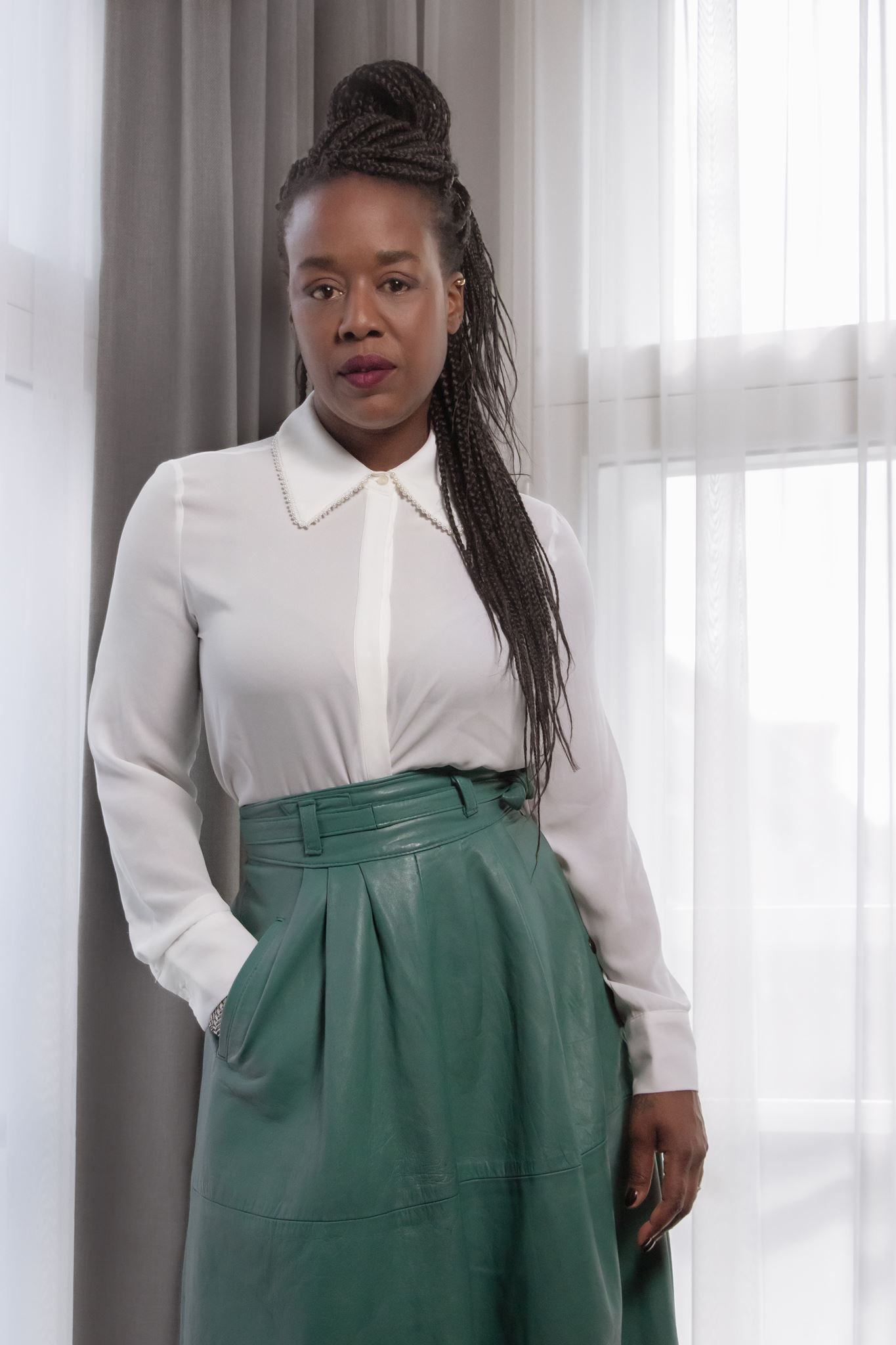
Emily Mattaka, Founder, The Mattaka Studio, works with founders and professionals on positioning, visibility and ownership. Her argument is that visibility is not the end goal of personal branding. It is where wealth creation begins.
Her work sits at the intersection of brand, reputation, ownership and the practical application of AI.
Ask most people what a brand is and they will describe a logo, a color palette, or a font chosen after three hours in Canva.
Emily Mattaka starts somewhere else entirely.
"Brand is not decoration. Brand is value."
She makes the case with a number. "In 1975, 83% of the value of S&P 500 companies came from tangible assets such as buildings, machinery and inventory. By the end of 2025, that had completely flipped, with intangible assets making up around 92% of that value. Trust, reputation, ideas and intellectual property are not decoration. They are the asset."
Money is moving the same way. She points to the September 2026 launch of OBSN by Steven Bartlett and Authentic Brands Group, with plans to invest up to $400 million in businesses built around content creators.
"Why? Because a big audience is not a business yet. Trust is what turns attention into a business."
Why this matters more in an AI world
Producing content has become almost free. And that changes what is actually scarce.
"Generic information is everywhere, so simply being able to say something is no longer very valuable. Having something worth saying is. A distinctive point of view creates trust, trust creates distribution, and distribution can become products, IP, licensing and ownership."
Your content is not the asset. You are the source of the asset, and your brand is the container around it. Visibility without trust is just noise.
AI multiplies what is already there
She describes AI as a wealth multiplier, and is precise about what that does and does not mean.
"AI doesn't magically create value. It multiplies what is already there. If you have a strong idea, AI can help that idea travel faster, further and in more formats."
If you have absolutely nothing to say, congratulations, you can now say nothing much faster.
For a small business, she says, the economics change. She cites a Harvard Business School study with Boston Consulting Group which found consultants using AI completed more tasks, worked faster and produced higher quality work. For a solo founder or a small team, that shifts what is possible.
She sees three multipliers. The first is insight: AI can analyze client questions, testimonials, sales calls, reviews and buying behavior in minutes, so offers are built around what people are already saying rather than what you assume they want. The second is translation, which she thinks is the real bottleneck for most founders.
"Most founders already have brilliant thoughts. The problem is often getting those thoughts out of their head in a way other people understand. AI helps translate the raw idea into a post, a keynote, an email, a video or a sales page without sanding off the personality."
The third is assets. A diagnostic, a methodology, a masterclass, a digital product or a client experience can now be built in days rather than through an agency and six weeks of meetings.
"Large companies may need hundreds of millions in infrastructure to turn trust into products. A small business owner can start doing it from her kitchen table with a laptop. Stop using AI only to create more content. Use it to create more assets. That is how you move away from selling hours and start building something that can grow beyond you."
What people fail to own
Asked what people in this new economy are failing to own, her answer is immediate: their own thinking.
"A lot of people are following the same path: person, content, followers, more content, more followers. It keeps you visible, but it can also keep you very busy without making you particularly wealthy."
The path she is interested in runs differently. Person, point of view, trust, audience, IP, products, ownership. It starts with the point of view, which she says is the thing people give away most easily, by borrowing someone else's language, copying someone else's framework and repeating what their industry already says.
"Own your thinking. Name something nobody has named yet. Create language your clients start repeating back to you. Because when people begin borrowing your language, something very interesting is happening: you are no longer simply participating in the conversation, you are shaping it."
That thinking sits behind her RELATE Framework™, which moves someone from recognition to action: they feel seen, they understand the real problem, they discover a new way of looking at it, they see how change could work, they begin to trust it might work for them, and then they take the next step.
"Marketing is a love story. No trust, no relationship. No relationship, no long term value. You do not have to force anyone. Good marketing helps someone see clearly enough to make their own decision, and that decision is where the relationship begins."
From expertise to foundership
She works with professionals on positioning and visibility, and sees a consistent pattern in the ones who hold back.
"They still see themselves as experts. Expertise is valuable, of course, but we are drowning in experts. Expertise has become the entry ticket. It is no longer automatically the differentiator, especially in a world where AI can explain almost any subject in seconds."
So the question she prefers is not how to become more visible.
"What could exist because people trust what I know?"
That could be a methodology, a diagnostic, a certification, a book ecosystem, a licensed framework, a membership, a media platform or eventually equity. Something with your thinking inside it that creates value without requiring another hour of your time. She uses a book as the example: it can hold ten years of intellectual property, but if the intelligence stays between two covers, you have made a beautiful book rather than a business asset.
"The professionals who hold back are often sitting on twenty years of knowledge that never leaves their head. That is not necessarily a business. Sometimes it is just a very sophisticated job you created for yourself. The move I care about is from expertise to foundership: from being the person who knows the thing to becoming the person who builds the thing."
Intuition as another layer of intelligence
Emily does not speak on trading, DeFi or tokenomics, and she is clear about why the commercial and human side is the part that holds her attention.
"Technology alone does not create movements. People do. People need to trust an idea, understand it, see themselves inside the possibility and believe in the leaders communicating why it matters."
She describes herself as an intuitive business coach, and is careful about what that means.
"It doesn't mean making random decisions based on a feeling. It means learning how to stay clear enough to sense what a situation is asking from you before fear, urgency or ego takes over."
In business and in investing, she points out, you are constantly deciding without the full picture. You can have the data, the strategy and the spreadsheets and still have to choose whether to move, wait or trust.
"The people who navigate uncertainty well have learned to separate intuition from emotion. Fear can feel like intuition. Excitement can feel like certainty. Panic can make you sell too early, jump too quickly or freeze completely. For me, intuition is not the opposite of strategy. It is another layer of intelligence."
That, she argues, is a leadership skill in industries built on novelty and uncertainty, and part of how wealth actually gets built.
"Other people can explain the charts. I'm interested in the human being looking at the chart and asking: what do I do with what I'm seeing?"
It is not about you
For a woman in the index about to take a stage for the first time, worried she is not expert enough, Emily's answer starts by moving the spotlight.
"Lady, it is not about you. It is about the person sitting in row fourteen who needs to hear what you have learned. The woman who will hear one sentence from you and suddenly think, oh, maybe I could do that too. That is why you go up there."
As for the feeling of not being expert enough, she notes that research suggests around 70% of people experience imposter feelings at some point.
"Most people you admire have walked onto a stage with shaky knees, a dry mouth and at least one moment of, why on earth did I agree to this? They went up anyway. You do not need to know everything. You need to know why you are there."
Her closing image is kintsugi, the Japanese practice of repairing broken pottery with gold.
"Your doubts, mistakes, scars and unfinished parts do not automatically make you less credible. Often they are exactly what makes people trust you. The cracks are not hidden. They become the gold. So do not try to become louder just for the sake of being visible. Become clearer. Find your focus, stand for something, shine on purpose and create a ripple."
Emily connects embodied leadership, the new female economy and the future of personal brands in an AI-driven world. She explores how founders and professionals can turn their unique perspective into trust, reputation and assets, using AI to develop their ideas into products and build businesses that grow beyond their own time.
She is in the Crypto Women Collective Speaker Index, which is open and free to use. Anyone can contact her directly.
Connect with Emily on LinkedIn.